April 6-8, 2026 | Suzhou, China
"Intelligent Robotic and Autonomous Systems"
Organizers:
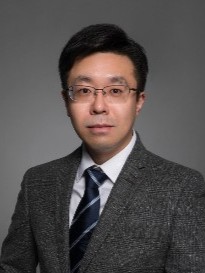
Quan Zhang, Xi’an Jiaotong-Liverpool University, China
Dr. Zhang received PhD in Electrical Engineering from University of Liverpool, Liverpool, UK, in 2015. He worked as a Lecturer in Wuxi Institute of Technology and as a Senior RD Engineer in Wuxi Ysphotech Semiconductor Technology Co., Ltd. from 2017 to 2018, and was a Research Associate in University of Liverpool from 2015 to 2017. Currently, he is an associate professor in Xi’an Jiaotong-Liverpool University. His research interests include both hardware and software aspects in mechatronics and robotics, involving intelligent control, computer vision, digital twin etc.
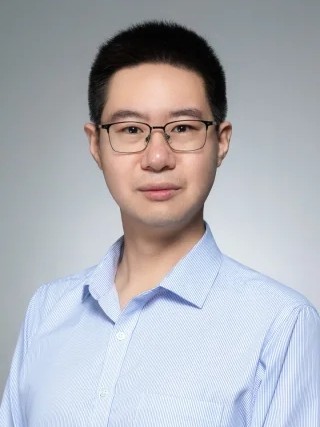
Bangxiang Chen, Xi’an Jiaotong-Liverpool University, China
Dr. Chen has joined Xi’an Jiaotong-Liverpool University since 2024 and is currently an assistant professor. His research interests include Mechatronics, Robotics, Biomimetic Robotics, Cheiwng robots, etc.
Tianru Zhang, Xi’an Jiaotong-Liverpool University, China
Dr. Tianru Zhang is an Assistant Professor in the Department of Mechatronics and Robotics at Xi’an Jiaotong-Liverpool University (XJTLU). He holds a B.Eng. from Northeastern University (2014), an M.Sc. from the University of Illinois at Chicago (2015), and a Ph.D. from the University of Nottingham (2021). Prior to joining XJTLU, he worked as a leading research engineer developing high-performance PMSM drive systems for 800V SiC electric vehicle powertrains. His research focuses on sensorless control of electrical machines and high-performance electrical drives, with applications in electric vehicles, UAV propulsion, and industrial variable speed systems. Currently, he leads projects on high-density drive systems for robotic actuators and electric system design for EVs and UAVs with SURF, FYP, and postgraduate students.
Introcduction:
The rapid convergence of artificial intelligence, advanced sensing, and computational power is driving a revolution in robotic and autonomous systems. These systems are transitioning from structured industrial settings to dynamic, unstructured environments, enabling transformative applications across manufacturing, logistics, healthcare, domestic service, and infrastructure inspection, etc. This evolution presents critical research challenges in robustness, adaptability, human-robot collaboration, and trustworthy autonomy.
This special session aims to provide a focused forum for presenting cutting-edge research and development in Intelligent Robotic and Autonomous Systems. It will address the integrated design of hardware, perception, intelligence, and control that underpins the next generation of robots. By bringing together experts from robotics, AI, computer vision, and related fields, the session will foster discussions on overcoming current limitations, sharing novel methodologies, and exploring the synergistic potential of technologies like digital twins and embodied AI. The goal is to chart a course for future intelligent systems that are safer, more efficient, and seamlessly integrated into human-centric environments.
This special session will discuss topics including, but not restrict to, the following:
-
Robotic and automation systems for industrial automation, intelligent manufacturing
-
Autonomous and mobile robotic systems in all relevant applications such as household, service, inspection, etc.
-
Related AI technology, computer vision, sensing technology, digital twin in robotics.